At a glance
| What you have | First useful question | Route to investigate |
|---|---|---|
| Broken plain gold | What are the eligible weight, purity and net offer? | Gold buyer or relevant local buying counter. |
| Signed or antique jewellery | Is there whole-piece value beyond metal? | A buyer familiar with that object type. |
| Diamond or other gem-set piece | What is known about the stones and setting? | Appropriate jewellery assessment, not gross weight alone. |
| Luxury watch | What are the reference, originality and condition? | Specialist watch route. |
| Mixed inherited belongings | Which items need separating or permission to sell? | Inventory first, then suitable buyers or other sale routes. |
| Item you must keep | Is borrowing repayable, and what is the loss risk? | Independent guidance before a credit decision. |
This hub organises the provider guides by the object and decision. It does not replace the existing general selling-routes comparison or claim Fair Vintage is independent of the buying market. Fair Vintage publishes this page and may benefit from a valuation enquiry. No provider pays for a ranking here.
Sort jewellery before comparing buyers
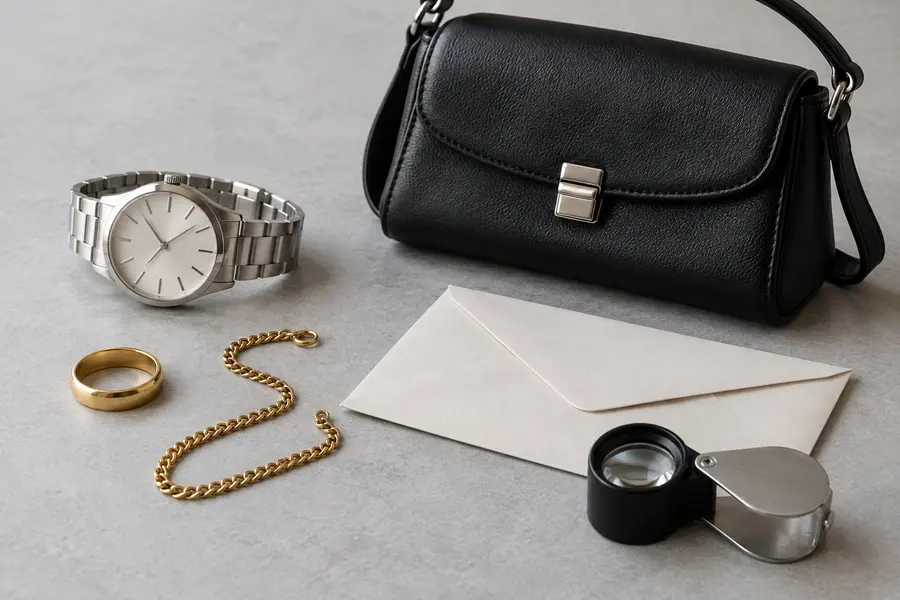
Lay out the pieces individually on a soft, uncluttered surface and photograph them. Keep pairs, chains with associated pendants, sets and paperwork together. Note damage and readable marks without guessing what an unfamiliar stamp means. A numbered list makes it easier to compare what each offer includes and prevents a bundle total being mistaken for itemised valuations.
Separate plain broken metal from pieces that may have maker, period or design interest. A signet ring, a complete antique brooch or a signed bracelet is not the same as broken chain links. Equally, a family story does not prove an important attribution. Record it as background and ask what evidence would establish the claim.
For inherited possessions, confirm authority before sale. Physical possession and permission to dispose of estate property are not always the same. If family decisions are unresolved, put those items aside. A buyer's willingness to assess them does not settle ownership questions or the executor's responsibilities.
Understand the metal calculation
Eligible gold weight multiplied by fineness gives fine-gold content. Multiply that by a fine-gold reference price per gram to understand the reference metal value. Buying margins and costs mean the offer may not equal that reference total. Gross item weight may include stones, steel components or other non-gold material, so ask how the eligible weight was established.
For example, a hypothetical 10g eligible weight at 375 fineness contains 3.75g of fine gold. At an explicitly invented reference price of £80 per fine-gold gram, the reference metal amount would be £300 before buying deductions. This is arithmetic only, not a live price, Fair Vintage offer or current rate from another provider. The calculator lets you explore the same units.
State the fineness basis precisely. A stamp of 585 represents a defined 0.585 fraction; it should not silently be replaced by a different fraction while retaining the same label. Compare price units too: a price per gram of fine gold and a price per gram of lower-fineness jewellery are not interchangeable. Record the timestamp when comparing a market-sensitive reference.
Hallmarks are evidence, not a payout promise
GOV.UK hallmarking guidance explains precious-metal standards and legal exemptions. A hallmark can help identify the metal standard; it does not authenticate a gemstone or establish what a buyer must pay. Missing marks can require further assessment rather than an automatic declaration that a piece has no value.
Do not file, acid-test, remove stones or polish heavily in an attempt to prove value yourself. These actions can damage the item or remove useful evidence. Photograph the marks and ask how testing will be performed, including whether permission is needed for any potentially marking procedure. An honest uncertainty is preferable to an irreversible home experiment.
Match the provider to the question
Local gold selling or a pawn enquiry
H&T advertises a separate gold-selling service and pawn lending. Decide whether you want a permanent sale or hope to recover the item; a loan advance and a purchase price are not two versions of the same valuation. Ask for the actual written figures for your chosen route.
Ordinary second-hand goods alongside valuables
Cash Converters describes selling, pawning and buyback separately. Cash Generator advertises used-goods buying and buyback. Confirm the particular branch accepts the item. A shop that suits a console may not be the right assessor for an unusual jewel.
Luxury assets and ownership decisions
Prestige Pawnbrokers, associated with Posh Pawn, describes assessment before a loan or sale offer. Authentication and condition matter, but borrowing still requires a realistic repayment plan. A luxury label does not make losing a pledge less consequential.
A mixed postal collection
The Vintage Cash Cow alternative guide compares postal and specialist routes for mixed collections. The provider now identifies itself as Vintage.com. Read its current terms, accepted categories and box-protection conditions before sending. Do not treat a mixed collection as one uniform material or assume blanket insurance.
In-person jewellery and specialist watches
The Hatton Garden guide explains identifying separate businesses through the district directory, rather than expecting one area-wide rate. Watchfinder is a specialist watch-selling route, with inspection and terms that need their own net-offer comparison. It is not a generic scrap-gold buyer comparison.
How to compare two or three offers
- Use one item record. Supply the same photographs, condition and accessories to each relevant assessor.
- Label the basis. Note scrap, whole-piece purchase, consignment or loan; do not combine them into an unexplained price league table.
- Record the stage. An initial estimate is not an inspected final offer.
- Calculate net proceeds. Identify charges, deductions and logistics costs rather than assuming a headline is the amount received.
- Check the next step. Read acceptance, custody, payment and return or withdrawal conditions before handing over the property.
If an assessment differs, ask why. The explanation may concern weight, purity, condition, missing evidence or a different resale route. A lower figure is not necessarily misconduct, and a higher figure may not be achievable. Comparing reasoning helps more than collecting optimistic numbers without conditions.
Costs, convenience and practical limits
A local visit takes travel and time. Postal selling requires packing, records and understanding transit conditions. Private sale involves description, enquiries and payment risk. Auction introduces its own fee schedule, timetable and unsold possibilities. Compare the actual proposed route; remember that no route is free and that a dealer's buying margin is not an avoidable fee.
The benefit of a straightforward direct offer is certainty once the actual terms and payment are agreed. Its limitation is that a buyer needs a commercially workable purchase price. A private or auction route may produce a different outcome but also carries uncertainty. No responsible guide can promise one route always beats every other buyer for every object.
If you want the item back
Read pawn versus sale before asking a business about borrowing. A sale is intended to be permanent, and sale-and-buyback does not always have the protections of regulated pawn credit. MoneyHelper explains pawn costs and non-redemption risks. Essential bills and realistic repayment matter more than the convenience of obtaining money today.
For a watch, use the luxury-watch route guide to compare purchase, consignment and borrowing separately. For jewellery with personal significance, consider the consequence of permanent loss before seeking a transaction. A commercially ordinary object can still be emotionally irreplaceable.
Questions from a public gold-selling discussion
The public r/UKFrugal thread Best place to sell gold?, dated 2 September 2025, discusses comparing selling options and checking the price basis. It illustrates useful consumer questions, not verified provider rates or a representative review. Forum answers are not a substitute for an item-specific assessment and written buying offer.
Questions about selling gold and jewellery
Should every gold item be valued as scrap?
No. Metal content can provide a baseline, but maker, period, construction, gemstones and whole-piece saleability may need separate assessment. Ask which basis the buyer used. Do not destroy a complete piece to obtain a metal-only figure before understanding whether it has a viable jewellery or collector resale route.
Which price should I use in a gold calculation?
Use an identified fine-gold reference price with its units and timestamp, then distinguish it from a buyer's actual offer. Multiply eligible gold weight by the defined fineness fraction before applying that reference. Do not treat gross jewellery weight, an invented example or a retail price as a guaranteed buying rate.
How many quotes do I need?
Two or three relevant comparisons can help where practical, but quality matters more than a fixed number. Use the same item description, assessment stage and transaction type. A bundle of uninspected estimates with unknown deductions may be less useful than one clear final offer and a well-understood alternative route.
Can I sell a mixed inherited jewellery box together?
Possibly, but first establish authority, document contents and separate items that may deserve specialist identification. Keep sets and paperwork together. A single route can reduce work, while splitting may clarify particular pieces. Ask what an offer includes and do not invent per-item allocations from an unexplained total.
Is Fair Vintage independent of these services?
Fair Vintage is not affiliated with the named providers, but it is itself a commercial buyer of valuables and publishes this guide. It may benefit if you enquire. That is different from a disinterested comparison publisher. Compare actual offers and terms; this page provides no universal highest-price or service-speed guarantee.
What if I need the jewellery back later?
Do not accept an outright sale on the assumption you can redeem it. Read the separate pawn and buyback explanations and consider repayment and loss risks carefully. If money pressure is persistent or essentials are already affected, free debt advice may be more useful than creating another deadline secured on an important possession.
Sources & how we checked
Official UK provider information and public guidance checked on 2026-10-17. We did not mystery-shop, obtain a loan or test a provider's buying prices. Examples labelled illustrative are arithmetic, not market data. Public discussions are anecdotal and are not customer ratings.
- GOV.UK: hallmarking and consumer protection — checked 2026-10-17.
- H&T: selling gold — checked 2026-10-17.
- Cash Converters UK: Sell to Us — checked 2026-10-17.
- Cash Generator: Sell to Us — checked 2026-10-17.
- Prestige Pawnbrokers: how pawnbroking works — checked 2026-10-17.
- Vintage.com: former Vintage Cash Cow homepage — checked 2026-10-17.
- Vintage.com: July 2026 terms and conditions — checked 2026-10-17.
- Hatton Garden BID: official district directory — checked 2026-10-17.
- Watchfinder UK: Sell Your Watch — checked 2026-10-17.
- MoneyHelper: pawnbrokers — checked 2026-10-17.