A sovereign ring has two possible values: the gold coin itself and the mount holding it. The coin is usually 22ct gold, while many ring mounts are 9ct or 18ct. A soldered, worn or replica coin may be valued mainly as gold, but a genuine, collectable sovereign should be checked before the ring is treated as ordinary scrap.
Fair Vintage pays 80% to 95% of the gold value, with no fees. Your exact percentage is confirmed in your written offer before you decide.
Choose a gold price locked by agreement and confirmed in writing before sending, or the average gold price in GBP between 9am and 5pm UK time on the day your parcel arrives.
See exactly what we pay for goldGold payout policy effective .
Key facts before you sell
- Modern full sovereigns are traditionally 22ct gold. Royal Mint specifications list 22 carat gold and 22.05mm diameter for sovereign examples.
- The ring mount can be a different fineness from the coin. Look for UK hallmarks such as 375 for 9ct or 750 for 18ct.
- Mounting can reduce numismatic premium. Claws, solder and rub-over bezels can mark or hide the coin edge.
- Copies and jewellery tokens exist. Diameter, weight, design detail and metal testing all matter.
- Do not remove the coin yourself. Levering a mount open can damage both the coin and ring.
| Part | What to check | Why it matters |
|---|---|---|
| The coin | Date, monarch, mint mark, diameter, weight and wear | Decides whether it is bullion-led or collectable |
| The mount | Hallmark, fineness, weight and damage | Adds gold value and sometimes design value |
| The setting | Claw, rub-over, soldered, pendant or rotating ring | Can preserve or damage the coin |
| Authenticity | Correct size, design detail and testing | Copies and jewellery pieces can mislead sellers |
| Paperwork | Receipts, certificates or family notes | Can support provenance or help identify when mounted |
What is the sovereign in a sovereign ring?
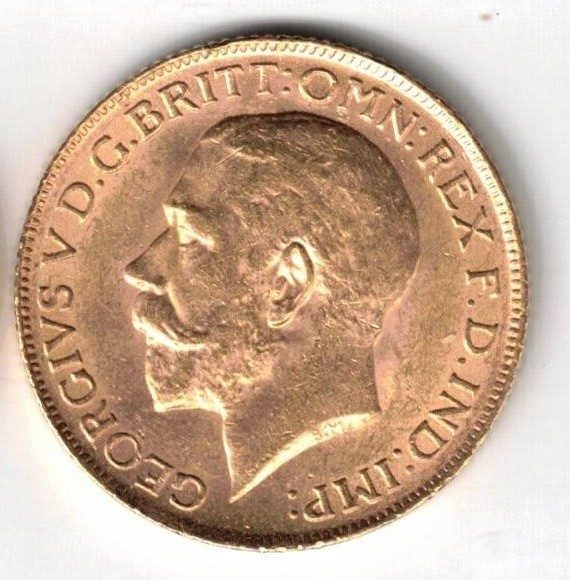
A British sovereign is a gold coin with a long history. Royal Mint product specifications for historic and modern sovereigns list the coin as 22 carat gold and around 22.05mm in diameter, with recent examples shown around 7.98g. Half sovereigns are smaller, and double sovereigns larger.
That matters because a seller sometimes describes any gold-coloured coin ring as a sovereign ring. The first step is to confirm whether the coin is a full sovereign, half sovereign, replica, token, commemorative or another gold coin entirely.
Is the mount worth more than the coin?
Sometimes, but not usually. The coin often contains more gold than the mount, especially where the ring is a light 9ct setting around a full sovereign. However, a heavy 18ct mount, a signet-style design or a well-made pendant frame can add meaningful value.
The mount should be assessed separately from the coin. A full ring weight is not enough because the coin and mount may have different gold fineness. The mount may carry a UK hallmark, while the coin carries its own specification and collector considerations.
Does mounting a sovereign reduce its collector value?
It can. A claw setting may leave the coin largely visible but can still wear the rim. A rub-over bezel hides the edge and can mark the coin. A soldered mount is more intrusive. Collectors generally prefer coins that have not been mounted, cleaned, polished or jewellery-worn, although common bullion sovereigns may still be valued mainly for gold.
Do not try to free the coin yourself. A slipped tool can gouge the coin, bend the mount and make both parts harder to sell. If the coin might be collectable, ask for an assessment before any alteration.
How should you photograph a sovereign ring?
Photograph the obverse, reverse, edge if visible, full side profile, hallmark inside the band and any solder or hinge. Put a ruler nearby for scale, but do not balance the ring in a way that could drop or scratch it. If the ring came with a receipt or box, photograph that too.
Good photographs help answer three separate questions: is the coin genuine, what is the mount made from, and has jewellery use changed the coin's collector appeal?
What if several beneficiaries are involved?
A sovereign ring can be emotionally loaded because it is both jewellery and money. An itemised written offer helps families see the coin value, mount value and condition reasoning. It also avoids a common mistake: accepting a simple scrap figure before checking whether the coin has collector premium.
Fair Vintage can assess the ring alongside other inherited gold, coins or jewellery, and explain if auction, private sale or a coin specialist is likely to be stronger.
Photograph the coin and mount separately
For a sovereign ring, photograph the coin face, reverse, visible rim, side profile and hallmark inside the band. If a bezel hides the edge, do not prise it open; the hidden edge is part of the condition question.
A simple scale photograph beside a ruler is useful because full sovereigns and half sovereigns are often confused in inherited jewellery boxes. Include receipts, old insurance notes or boxes if they came with the ring.
What people ask online
People ask whether mounted coins are worth only gold.
The useful answer is: often bullion-led, but date, condition and mounting style still need checking. See an r/coins discussion about mounted coin value.
Sellers ask how to value the band separately from the sovereign.
The band and coin can have different fineness, so weight and hallmarks both matter. See an r/coins thread about a sovereign ring.
Some inherited coin necklaces turn out to be sovereigns or half sovereigns.
A size and weight check is a sensible first step before assuming value. See an r/coins thread about a coin found in jewellery.
Selling it without pressure
If you have a mounted sovereign, send photos of the coin and mount before deciding whether it is simply scrap. Our gold sovereign valuation, inherited gold coins and gold jewellery pages explain the nearby routes.
Email coin and hallmark photos first if you are unsure. Keep the ring mounted until it has been assessed.
Frequently asked questions
Should I remove a sovereign from a ring before selling?
No. Removing it can damage the coin and mount. Photograph it as mounted and ask for an assessment first.
Is a sovereign ring always 22ct gold?
The coin is traditionally 22ct if it is a genuine sovereign, but the mount can be 9ct, 14ct, 18ct or another metal.
Can a mounted sovereign still have collector value?
Sometimes. Common worn coins are often gold-led, but date, mint, condition and mounting damage need checking.
Do capital gains tax rules apply to sovereign rings?
Tax treatment can depend on the exact coin and circumstances. This guide is not tax advice; ask HMRC or a qualified adviser for tax questions.
Sources
- The Royal Mint archive, The Sovereign 2021. Accessed 2026-10-05.
- The Royal Mint gold investment guide, sovereign specifications. Accessed 2026-10-05.
- GOV.UK hallmarking practical guidance. Accessed 2026-10-05.
- GOV.UK hallmarking in the UK: consumer protection. Accessed 2026-10-05.
- Sheffield Assay Office guide to UK hallmarks. Accessed 2026-10-05.