Victorian mourning jewellery is best identified by evidence, not by colour alone. Look for memorial inscriptions, hairwork under glass, black enamel on gold, period fittings, hallmarks and the material itself. Jet, French jet, vulcanite and bog oak can look similar, so avoid destructive tests and get uncertain pieces checked before selling.
Key facts before you sell
- Black jewellery is not automatically mourning jewellery. Met Museum and V&A examples show inscriptions and hairwork as stronger evidence than colour alone.
- Whitby jet is only one possible black material. Whitby Museum records vulcanite, black glass, bog oak and other jet simulants.
- Hairwork can be memorial or sentimental. The Met notes inscriptions often distinguish mourning pieces from tokens of affection.
- UK hallmarks can help date gold mounts. GOV.UK and the Assay Offices explain fineness, sponsor and assay-office marks.
- Avoid hot-needle and scratch tests. They can permanently damage jet, vulcanite, enamel and hairwork settings.
| Feature | What it may suggest | Safe check |
|---|---|---|
| Memorial inscription | A stronger mourning clue than colour alone | Photograph the back, rim and inside of lockets or rings |
| Hair under glass | Memorial or sentimental hairwork | Check whether the compartment is sealed and undisturbed |
| Deep black carved material | Whitby jet, vulcanite, bog oak, glass or another simulant | Compare weight, warmth and mould lines; do not scratch |
| Black enamel on gold | Often seen on mourning rings and lockets | Look for chips, losses, dates and hallmarks |
| Modern clasp or solder | Possible repair, revival or altered piece | Photograph fittings and any replaced parts |
Is black jewellery always mourning jewellery?
No. Black jewellery was fashionable as well as commemorative. Some pieces were made for mourning, some for ordinary dress, some for half-mourning and some much later as Victorian revival jewellery. The most useful clues are inscriptions, dates, initials, hairwork compartments, black enamel wording such as In Memory Of, and the construction of the piece.
A plain black bead necklace with a modern clasp may be decorative French jet glass or later costume jewellery. A gold brooch with a dated inscription, woven hair under crystal and a period clasp is a much stronger mourning candidate. Treat colour as the first question, not the answer.
How do you tell Whitby jet from French jet, vulcanite and bog oak?
Whitby jet is a fossilised material associated with the Yorkshire coast and Victorian mourning jewellery, but it was heavily imitated. Whitby Museum describes a wide range of substitutes, including vulcanite, black glass often called French jet, bog oak and later synthetic materials.
Safe clues include weight, temperature and construction. Jet tends to feel light and comparatively warm. Glass is usually colder, heavier and often faceted more uniformly. Vulcanite can show mould lines and may have a brownish cast where worn. Bog oak is carved wood and can show a different grain or surface. None of those observations proves the answer on its own, which is why destructive home tests are a bad idea.
Why hairwork needs careful handling
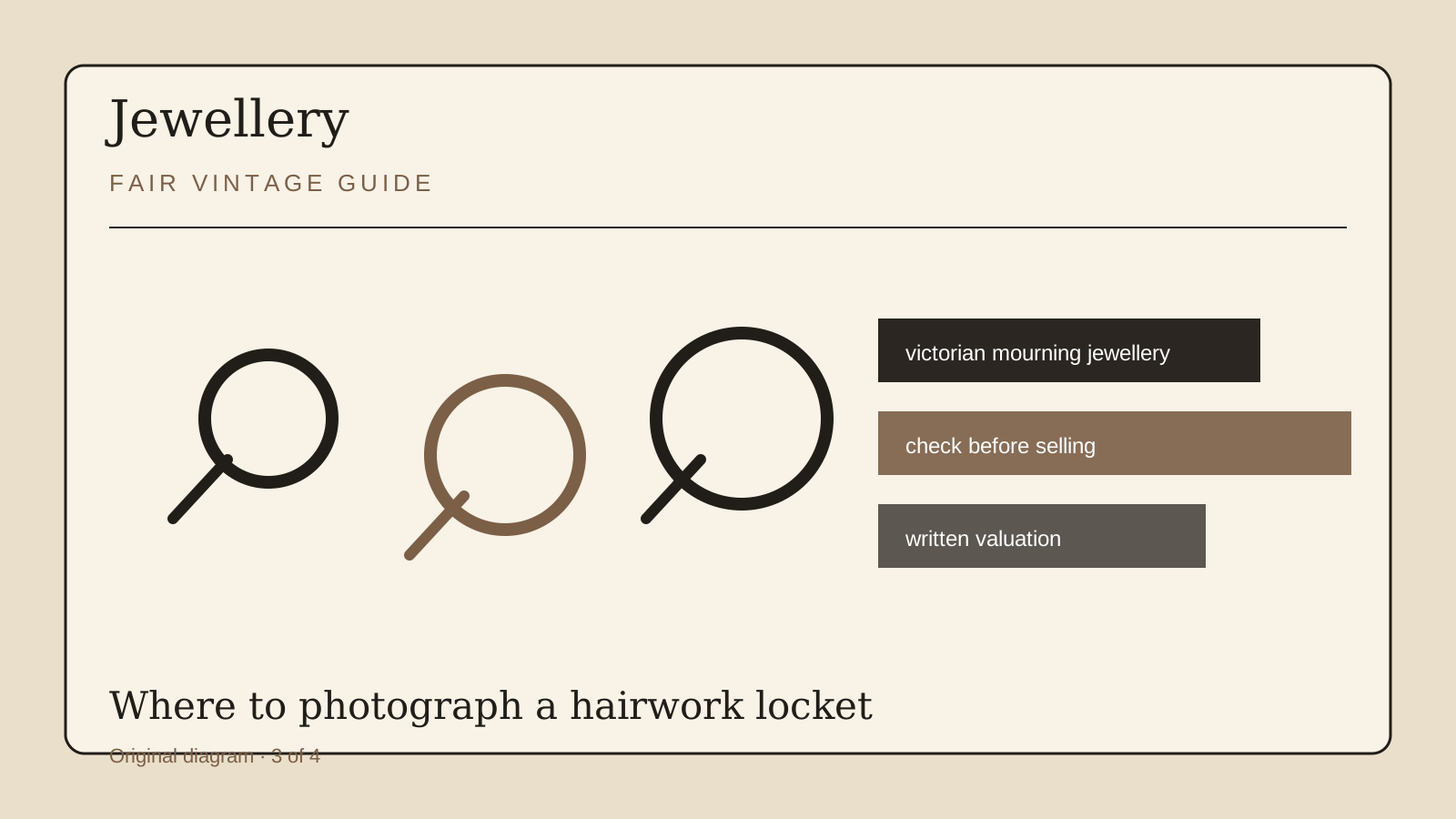
Hairwork was both a professional craft and a personal memorial practice. The V&A describes Victorian hair artists who turned locks of hair into jewellery, with catalogues and guarantees that the hair would not be mixed up. The Met describes hair plaited beneath crystal in brooches and notes that inscriptions can show whether the piece was for mourning or affection.
Do not open sealed compartments, steam clean the glass or try to remove dust from behind a cover. Moisture and movement can disturb the hairwork, and once a sealed memorial compartment is altered it may lose both historical interest and family meaning.
What period details should you photograph?
Photograph the front, back, clasp, hinge, pin, locket interior, inscriptions and any hallmarks. A Victorian brooch pin often has a different construction from a later safety clasp. Rings and lockets may carry date letters or sponsor marks that help narrow the period, but the hallmark needs to be read as a set: sponsor, fineness and assay office, with date letters only where present.
Good photographs help a specialist separate an original mourning piece from a later revival, a repaired item or a decorative black jewel. They also help decide whether a piece is better assessed for antique value, metal value, family history or auction potential.
Should you clean or test mourning jewellery before selling?
Usually no. Jet can chip or scratch, enamel can flake, vulcanite can mark, and hairwork can be disturbed by moisture. Avoid hot needles, scratch tests, aggressive polishing, ultrasonic cleaning and home chemical tests. If a piece is dusty, store it dry and photograph it as found.
If the piece came from an estate, keep any old box, note, will reference or family label. Context can matter, and even when it does not add commercial value, it helps explain why the object exists.
The photographs that help most
For mourning jewellery, the most useful photographs are the reverse, hinge, clasp, inscriptions, locket interior and any hairwork compartment. Photograph black material in natural light from the side so chips, mould lines, carving and glass facets are visible.
Do not open sealed memorial compartments or polish black enamel to make lettering stand out. A slightly dusty but undisturbed photograph is better evidence than a cleaned piece with lost surface detail.
What people ask online
People ask whether a black pendant is jet, onyx, glass or obsidian.
The useful answer is to slow down: material ID needs weight, warmth, fracture, construction and often in-person inspection. See an r/JewelryIdentification discussion about black jewellery.
Several threads confuse hair jewellery with mourning jewellery.
Hair can be memorial, sentimental or decorative, so inscriptions and context matter. See a vintage jewellery thread about hairwork.
Collectors often warn that not all black antique jewellery is mourning jewellery.
That warning is right: a mourning attribution needs more than colour. See a Victorian-era thread about a mourning brooch.
Selling it without pressure
If the piece is Victorian or possibly mourning-related, start with our Victorian jewellery valuation route or the broader antique jewellery guide. Lockets and brooches often need separate photographs, so the inherited locket and antique brooch pages are useful companions.
Email clear photos first if the piece is delicate. When ready, request a free insured label and keep family notes with the item.
Frequently asked questions
Is French jet real jet?
No. French jet is a traditional name for black glass used as a jet simulant. It can be collectable, but it is not Whitby jet.
Can I use the hot-needle test on jet?
No. A hot needle can damage or mark the object. Use non-destructive observations and ask a specialist if the material matters to value.
Does hair inside a locket always mean mourning?
No. Hairwork can be memorial or sentimental. Inscriptions, dates and the design decide whether mourning is a fair description.
Can damaged mourning jewellery still be sold?
Often yes, but chips to jet, enamel loss, broken glass or disturbed hairwork affect value and should be disclosed.
Sources
- Whitby Museum, Jet and Jet Jewellery. Accessed 2026-10-05.
- Whitby Museum, Jet FAQ. Accessed 2026-10-05.
- V&A Blog, Hair. Accessed 2026-10-05.
- The Met collection, hairwork brooch. Accessed 2026-10-05.
- GOV.UK hallmarking practical guidance. Accessed 2026-10-05.
- Sheffield Assay Office guide to UK hallmarks. Accessed 2026-10-05.